








Nicola Trivett
General Manager & Sustainability Leader
The UAE’s food and beverage sector is booming. The market reached USD 23.21 billion in 2025. By 2030, it is expected to hit USD 52.76 billion. That is a growth rate of 17.84% per year, driven by tourism and an increasingly discerning dining public.
But here is what many restaurateurs are discovering. Success is no longer just about the menu or the location. The physical space matters too. How it is designed, built, and operated has become a genuine differentiator.
Guests notice when a restaurant feels considered. They notice when sustainability is woven into the experience rather than bolted on as an afterthought.
As someone who has spent decades working with commercial fit out projects across the UAE, I have watched the hospitality sector evolve. The conversation has shifted. It used to be “How quickly can we open?” Now it is “How can we build something that lasts and reflects our values?”
This guide explores what sustainable restaurant fit-out actually means in practice. More importantly, it shows why it matters for your bottom line as much as your brand.
Why Do Restaurants Use So Much Energy?
Restaurants are energy-hungry spaces. In fact, high-volume quick-service restaurants can use up to 10 times more energy per square foot than other commercial buildings.
The reasons are straightforward. Commercial kitchens run powerful equipment for extended hours. Refrigeration operates around the clock. HVAC systems work overtime to manage heat, humidity, and air quality.
In the UAE, these challenges are even greater. Our climate demands robust cooling systems. As a result, the commercial fit out of a restaurant must account for two things: the intense heat from kitchens and the need to keep dining areas comfortable year-round.
So where does all this energy go? Restaurants generally use the most electricity for refrigeration, followed by lighting, then cooling. However, the exact breakdown varies by restaurant type, cuisine, and operating hours.
The good news? Each category presents opportunities for improvement. Thoughtful fit-out decisions made early in the design process can lock in savings for years.
Restaurant Energy Consumption: Key Categories
| Energy Category | Key Considerations |
|---|---|
| Cooking & Food Prep | Equipment efficiency, ventilation design |
| HVAC & Ventilation | Zoning, smart controls, kitchen exhaust |
| Refrigeration | Door seals, temperature monitoring, efficient units |
| Lighting | LED retrofits, daylight harvesting |
| Sanitation & Water | Low-flow fixtures, efficient dishwashers |
The Business Case: Why Guests Are Paying Attention
Consumer expectations have shifted considerably:
- 73% of respondents consider a restaurant’s approach to sustainability an important factor when deciding where to eat. Sustainability is particularly important to younger diners, as 41% of respondents in their 20s marked it as “very important”.
- Perhaps more striking is the willingness to pay for it. 72% of respondents are willing to pay more at a restaurant that prioritizes sustainability, with 18% saying they’d pay 6-10% more.
- The preference for locally sourced ingredients stands out. 44% of respondents are most encouraged to visit a restaurant if it uses locally sourced ingredients.
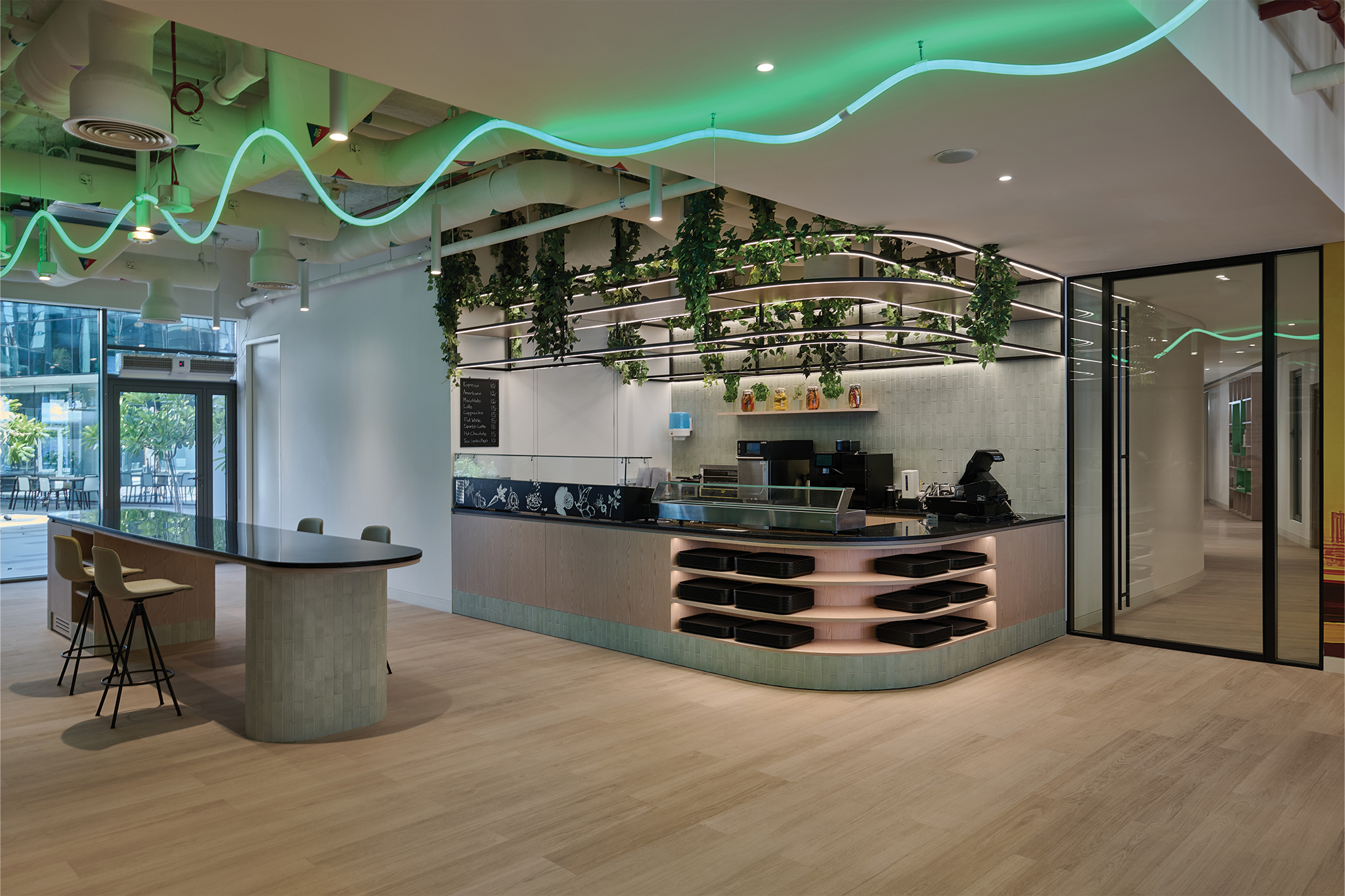
This connects directly to fit-out decisions: Restaurants designed with visible preparation areas, herb gardens, or displays showcasing local suppliers can communicate their sustainability story without saying a word.
Commercial Kitchen Fit-Out: HVAC, Equipment, and Efficiency
The kitchen is where a sustainable fit-out project succeeds or fails. Why? Because decisions made now lock in operational costs for years to come.
Let us break it down:
HVAC and Ventilation
Kitchen ventilation is one of the largest energy demands in any restaurant. Proper exhaust hood design matters. So does demand-controlled ventilation. When these systems work well with the overall HVAC strategy, energy waste drops significantly.
Smart zoning is equally important. Kitchens and dining areas have very different thermal needs. A well-designed project from an expert in fit-out will create distinct climate zones with independent controls. This prevents a common problem: overcooling the dining area just to compensate for kitchen heat.
Equipment Selection
ENERGY STAR certified commercial food service equipment can deliver meaningful savings. These units cut utility costs without sacrificing quality or features.
However, the equipment itself is only part of the story. Layout and operational habits matter too. Cutting idle time on kitchen equipment is one of the best ways to conserve energy. Simple practices, like turning off unused equipment during slower periods, add up over time.
Induction cooktops also deserve attention. Unlike gas or traditional electric hobs, induction transfers about 90% of energy directly into the cookware. This means less ambient heat, lower HVAC demands, and better temperature control.
Restaurant Lighting Design: Why LEDs Deliver the Fastest ROI
If there is one change that delivers immediate returns, it is LED lighting.
The numbers are compelling. LEDs use up to 90% less energy than incandescent bulbs. They also last up to 25 times longer. According to the U.S. Department of Energy, ENERGY STAR rated LEDs use at least 75% less energy than traditional options.
For restaurants, lighting serves multiple purposes. In dining areas, it sets the mood. In kitchens, it ensures safety. A high Colour Rendering Index (CRI) of 80 to 90+ helps staff spot colour changes that indicate food quality.
The interior fit-out company you work with should understand these nuances. Good lighting design is not just about fixtures. It is about creating the right illumination for each zone while maximising natural light.
Consider adding:
- Daylight sensors in dining areas
- Occupancy sensors in storage and restrooms
- Dimmable LED systems for atmosphere control
These features reduce energy use without compromising the guest experience.
Materials That Tell a Story
The materials chosen for a restaurant fit-out communicate values before a single dish is served. Sustainable material selection encompasses several considerations: Environmental impact, durability, maintenance requirements, and indoor air quality.
Low-VOC and Non-Toxic Finishes
Volatile Organic Compounds (VOCs) from paints, adhesives, and finishes affect indoor air quality and can persist long after a fit-out is completed. For restaurants, where guests and staff spend extended periods in enclosed spaces, low-VOC or zero-VOC products are essential. Beyond health considerations, these products now match or exceed the performance of conventional alternatives.
Reclaimed and Recycled Materials
Reclaimed wood, recycled metals, and repurposed fixtures add character while reducing environmental impact. London’s Silo restaurant demonstrates how far this approach can extend: Recycled plastic packaging forms the bar and tabletops, sustainable wood provides table bases, and mycelium (the network of threads from which mushrooms grow) creates pendant light fixtures.
Biophilic Design Elements
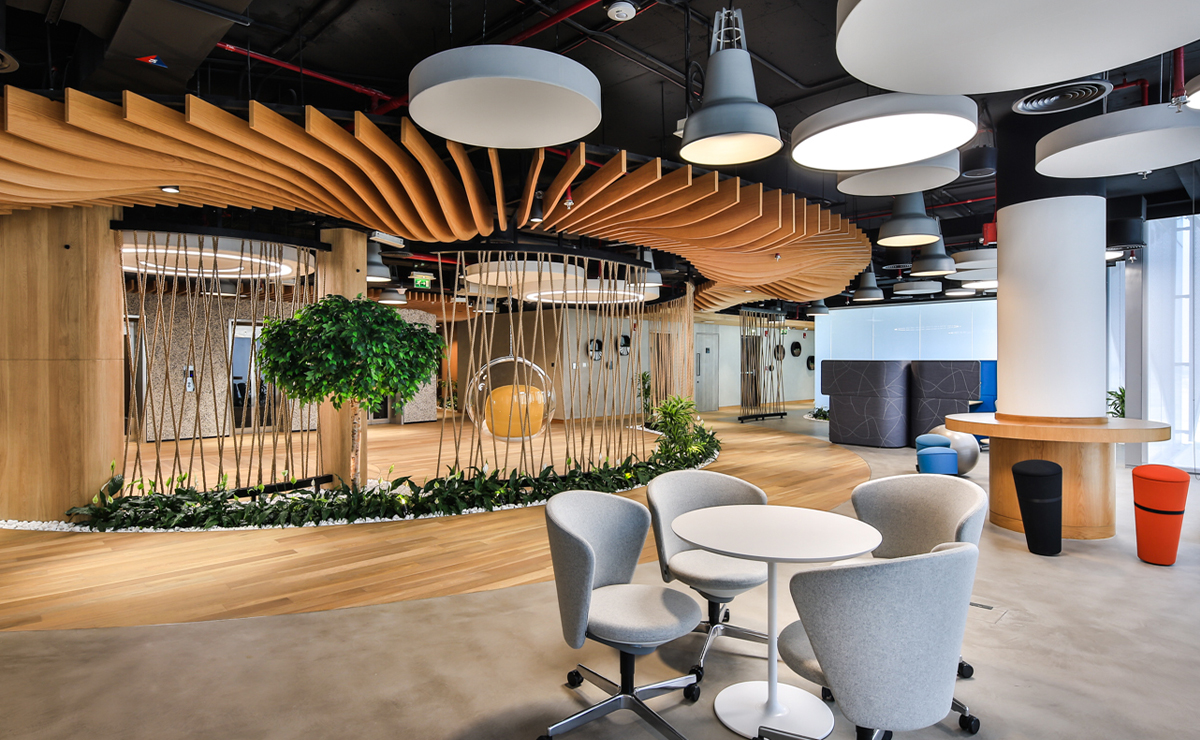
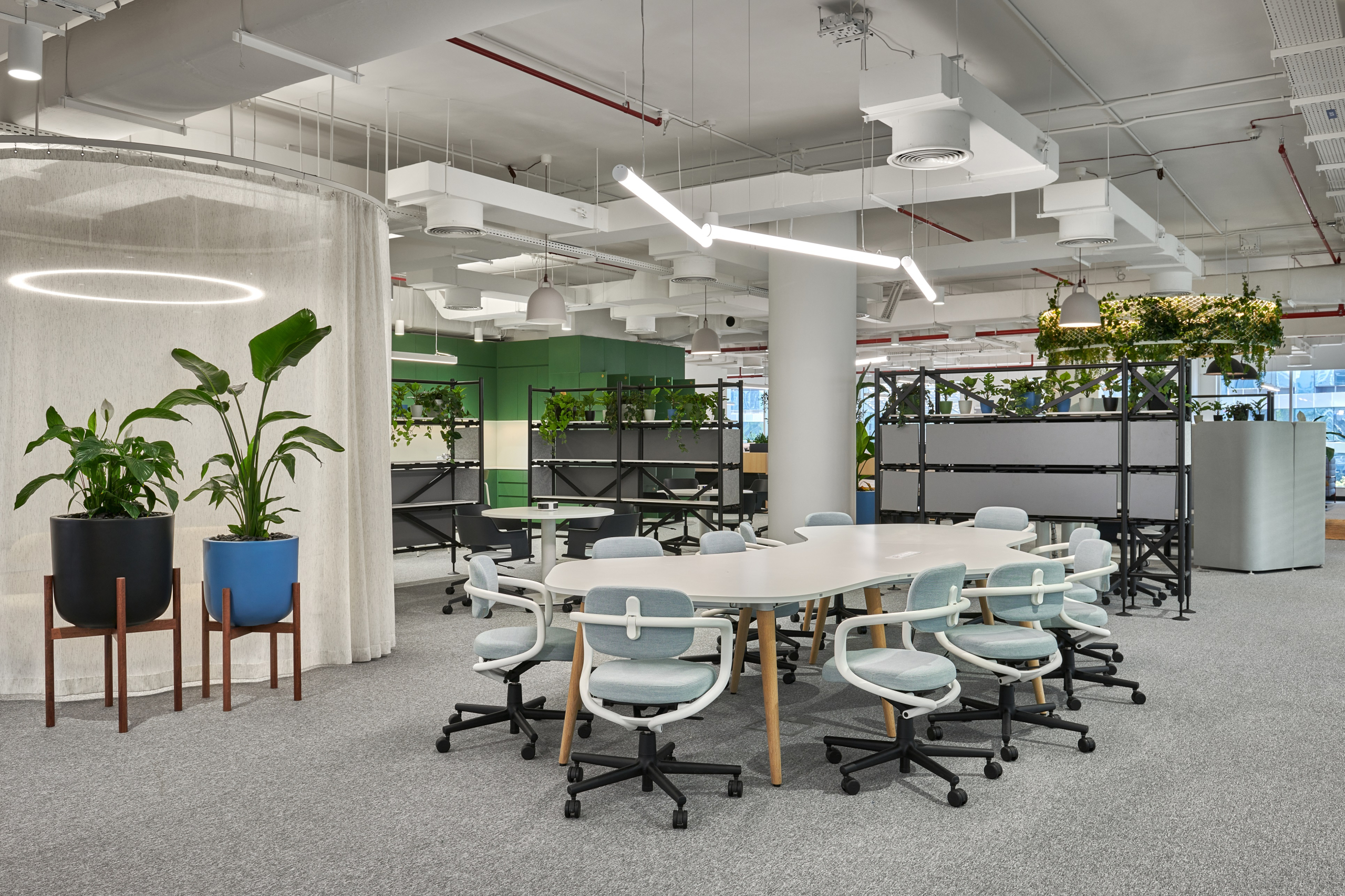
Incorporating natural elements, from living walls and indoor plants to natural stone and responsibly sourced timber, creates environments that feel calming and connected to nature. This biophilic approach improves air quality, dampens sound, and has been shown to enhance occupant wellbeing. For commercial fit-out companies working on restaurant projects, biophilic design represents an opportunity to create genuinely distinctive spaces that resonate with sustainability-minded guests.
UAE Food Waste: How Restaurant Design Can Help
Food waste is a major challenge in the UAE. The numbers are sobering.
According to the Ministry of Climate Change and Environment, the UAE wastes an estimated 3.27 million tonnes of food each year. That costs the economy approximately $3.5 billion annually.
In Dubai alone, 38% of prepared food ends up wasted. During Ramadan, that figure rises to 60%.
The national initiative Ne’ma has set an ambitious goal: reduce food waste by 50% by 2030.
Explore our article about waste in
What Does This Mean for Fit-Out?
Thoughtful design can support waste reduction in several ways:
- Storage design: Proper configurations extend ingredient freshness
- Waste sorting areas: Dedicated space for sorting and composting
- Kitchen layout: Efficient flow supports better inventory management
Some Dubai fit-out contractors now include waste separation areas as standard. Why? They anticipate these will become regulatory requirements, not optional extras.
What UAE Leaders Are Doing Differently
The Michelin Guide Dubai 2025 awarded the Green Star to three restaurants: BOCA, LOWE, and Teible. Each offers lessons for restaurateurs planning their own fit-out.
LOWE: Dubai’s First Green Star
Located in Al Barari, LOWE was Dubai’s first restaurant to receive the Michelin Green Star back in 2022.
What makes them different? The team cooks with wood fire to reduce energy consumption. They also close on Mondays and Tuesdays to conserve power. Their “Waste NOT” dinners feature 8 to 10 courses made entirely from would-be waste products.
Teible: 100% Zero Waste
At Jameel Arts Centre, Teible has achieved 100% zero waste in its kitchen. How? Through fermenting, pickling, preserving, and repurposing ingredients.
The restaurant sources 85 to 90% of ingredients from small-scale UAE farms. Onion peels become seasonings. Parsley stems turn into salsas.
Sofitel Dubai The Obelisk: From Surplus to Purpose
Executive Chef Russell Impiazzi has championed sustainability across Sofitel’s five dining outlets.
The kitchen partners with Reloop to compost 100% of food leftovers. Nothing reaches landfill. They have also donated over 25,000 meals to the UAE Food Bank by turning surplus into nutritious food for the community.
Summertown’s Approach in Practice: How Summertown Applies These Principles
The strategies used by Dubai’s most sustainable restaurants, such as energy-efficient kitchens, waste-conscious layouts, and certified materials, are the same principles we bring to every project.
While our portfolio spans offices, healthcare, and education, the fundamentals of sustainable design remain consistent. We have delivered:
- 150+ fit-out projects across the UAE
- 21+ LEED certifications, including cafeteria and amenity spaces
- Staff amenity areas with energy-efficient equipment and waste management systems
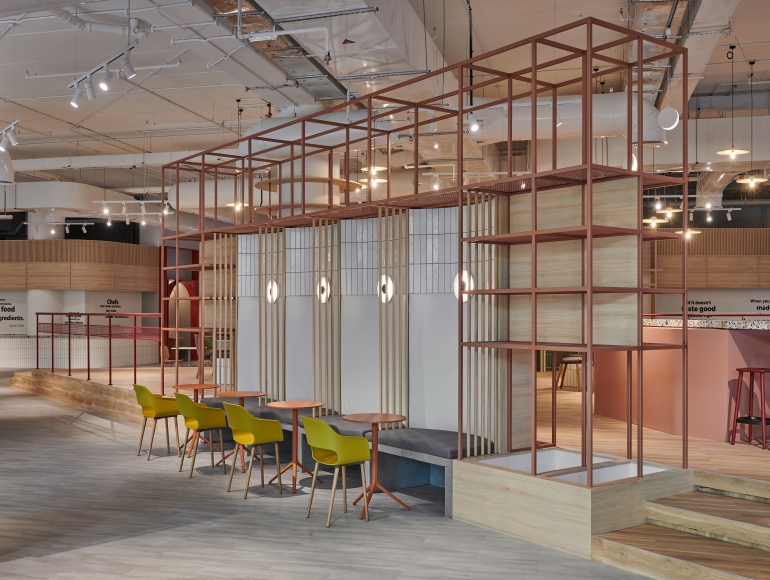
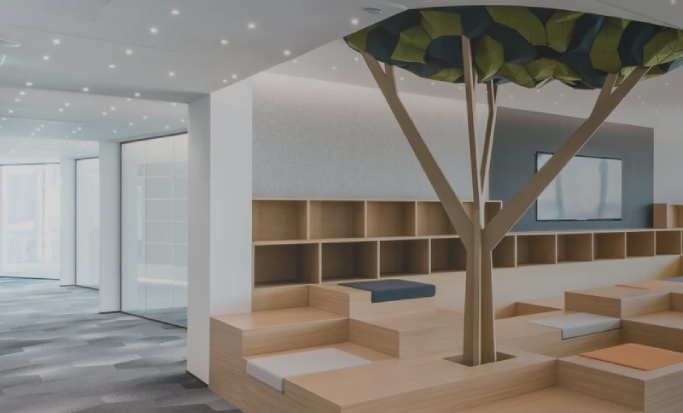
Our Picnic Square project at Times Square Center transformed a 2,330 square metre dining destination using natural materials, biophilic design, and LEED-aligned construction practices. The project diverted 58% of construction waste from landfill and achieved a 29% reduction in energy use compared to baseline designs.
The strategies are consistent. Energy-efficient systems. Responsible materials. Waste-conscious construction. Whether it is a Michelin Green Star restaurant or a family-friendly food hall, sustainable fit-out delivers measurable results.
See the Picnic Square Project →
🎬 See the Project Come to Life
Want to hear directly from the team who delivered Picnic Square? Watch them share the challenges, decisions, and results behind the project.
How to Plan a Sustainable Restaurant Fit-Out in Dubai
Ready to get started? The path need not be overwhelming. Often, the most impactful decisions involve careful planning rather than extra expense.
Here are six practical steps:
1. Start with an energy audit mindset Before finalising designs, map out where energy will be consumed. Identify efficiency opportunities in equipment, lighting, and HVAC. These early decisions shape costs for years.
2. Prioritise high-impact changes LED lighting offers quick returns. Efficient kitchen ventilation reduces both energy costs and HVAC strain. Quality insulation prevents overcooling problems.
3. Choose materials for longevity Durable finishes cost more upfront but reduce replacement cycles. Low-VOC products protect air quality without sacrificing performance.
4. Design for waste reduction Allocate space for sorting, composting, and proper storage. It is cheaper to include these during the initial fit-out than to retrofit later.
5. Communicate your story Remember: 44% of diners prefer to learn about sustainability through the menu. Another 41% look online. Your space can tell this story through visible design choices.
6. Partner with the right experts. Work with experts in sustainable fit-out who understand sustainable hospitality. Their experience can help you avoid costly mistakes.
Planning a Sustainable Restaurant Fit-Out?
Summertown Interiors has delivered sustainable commercial fit-out projects across the UAE for over 28 years. From LEED-certified offices to hospitality spaces, we bring expertise in creating environments that perform for people and planet.
Explore our approach: Sustainable Interior Fit-Out
The Future of Sustainable F&B Design in the UAE
The UAE has committed to Net Zero by 2050. Dubai has set a Zero Waste to Landfill target for 2030. These goals will shape regulations for commercial spaces, including restaurants.
Fit-outs designed today with sustainability in mind will be ready for tomorrow’s standards.
Beyond compliance, the business case is clear. Well-designed sustainable spaces cost less to operate. They appeal to conscious consumers. They create healthier environments for staff.
The question is not whether sustainable fit-out makes sense. The evidence on energy savings, consumer preferences, and regulation is clear.
The real question is this: Will your next project embrace these principles from the start? Or will you retrofit them later at greater cost?
The UAE’s F&B sector continues to grow. Competition intensifies. Guests have more choices than ever. In this environment, the spaces that stand out will be those built with intention, designed to perform efficiently, and aligned with the values that matter to diners.
Sources
- Mordor Intelligence (November 2025). United Arab Emirates Foodservice Market Forecasts 2030. mordorintelligence.com
- U.S. Energy Information Administration. Commercial Buildings Energy Consumption Survey (CBECS): Food Service Buildings. eia.gov
- Energy Star. ENERGY STAR for Small Business: Restaurants. energystar.gov
- U.S. Department of Energy. LED Lighting. energy.gov/energysaver/led-lighting
- U.S. Department of Energy. Lighting Choices to Save You Money. energy.gov/energysaver/lighting-choices-save-you-money
- Toast (March 2025). How Diners Really Feel About Sustainability in Restaurants Survey. pos.toasttab.com
- Farrelly Mitchell (February 2025). UAE Food Waste: A Rising Tide. farrellymitchell.com
- Ne’ma/Behavioural Insights Team (December 2024). Reducing Food Waste in the UAE’s Cafeterias. bi.team
- Michelin Guide Dubai (May 2025). Full List of the MICHELIN Guide Dubai Selection. guide.michelin.com
- Michelin Guide (February 2025). Zero-Waste Dining: The Future of Food in Dubai’s MICHELIN-Recommended Restaurants. guide.michelin.com
- Michelin Guide (January 2024). Green Star Focus: LOWE. guide.michelin.com
- The Ethicalist (April 2025). Food Waste Heroes: 6 Dubai Restaurants Offering Green Dining. theethicalist.com

Nicola Trivett
General Manager & Sustainability Leader