









Nicola Trivett
General Manager & Sustainability Leader
Last Updates July 2026
Every business leader I speak with cares about their team’s wellbeing. Almost as many stop short of investing in it, because it is hard to defend on a spreadsheet next to costs they can measure precisely. That gap is closing fast. Wellness-focused office design is no longer treated as a soft benefit. It is increasingly assessed the way any other business investment is: By the return it generates.
At Summertown Interiors, we sit at the intersection of these two conversations every day, design decisions on one side, budget conversations on the other. Here is how the ROI of wellness office design actually stacks up, and what it means for a business planning a fit-out in the UAE.
Why this is now a boardroom conversation
The UAE’s wellness economy was valued at $40.8 billion in 2025, the fastest-growing wellness market in the Middle East and North Africa (Global Wellness Institute, November 2025). That is a broad economic figure rather than an office-specific one, but it signals something important for employers: Wellbeing has become a mainstream expectation here, not a niche preference. Businesses that ignore it are increasingly out of step with what their own workforce expects.
That shift changes how a fit-out budget should be viewed. Wellness-focused design is not a cost layered on top of a standard office. It is a decision about where the same budget goes, and increasingly, what it returns.
What the return actually looks like
The clearest, best-evidenced return is on people, not utilities. Research from the Global Wellness Institute, drawing on McKinsey Health Institute’s 2025 workplace study, found that organisations prioritising employee wellbeing report up to 20% higher productivity and 10% higher retention rates. These figures are global rather than UAE-specific, but they translate directly to a market like ours, where the cost of losing and replacing skilled staff is high, and where competition for talent across Dubai and Abu Dhabi is intense.
Where the investment actually goes
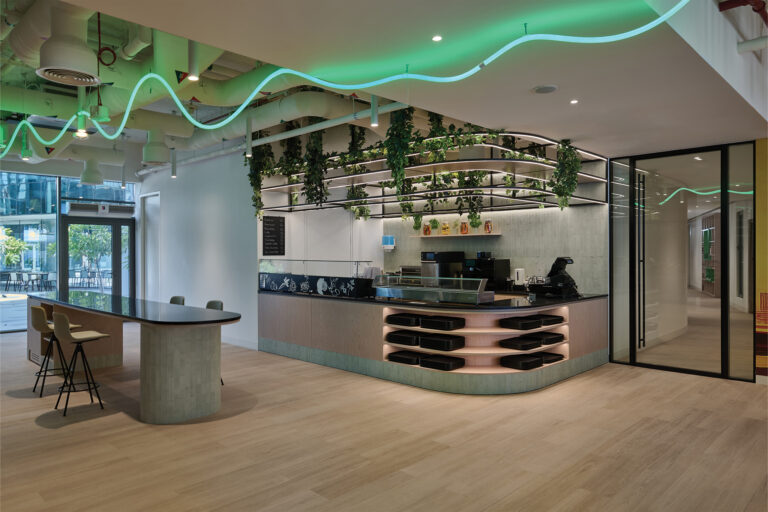
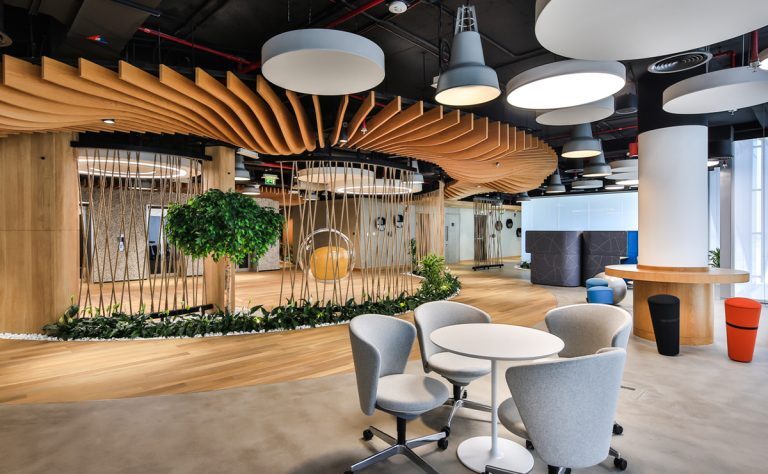
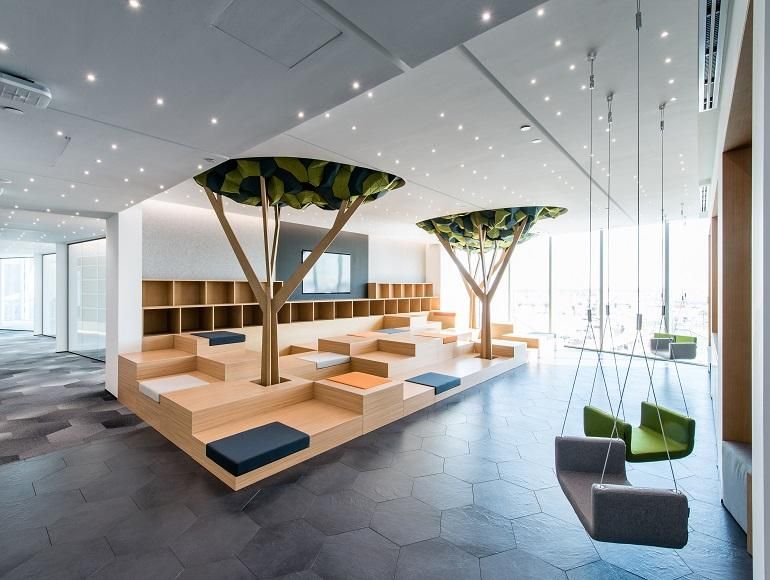
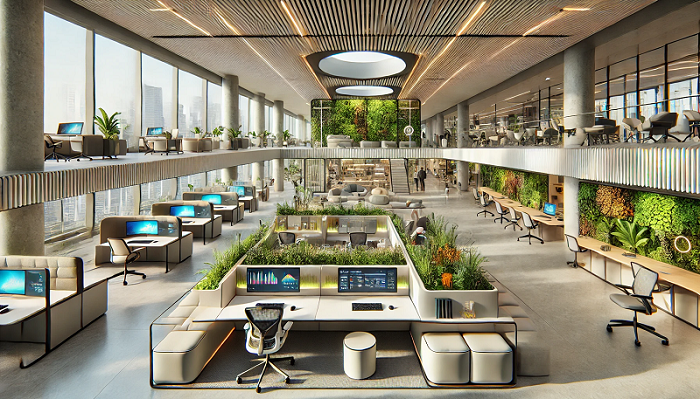
Wellness-focused design is not one large expense. It is a series of specific, practical decisions made at the design stage. Biophilic elements, natural light, greenery, and organic materials, address the psychological toll of an arid climate where outdoor green space is limited, an approach we’ve written about in more depth in our [biophilic design guide] Indoor air quality improvements, through low VOC materials and higher-specification HVAC, directly affect cognitive function and reduce the fatigue that drags on focus through the day. Ergonomic furniture and flexible zoning reduce physical strain and give people the choice of environment that suits the task in front of them.
None of these are dramatic overspends against a standard fit-out. They are choices made early, in the material specification and layout stages, where the cost difference against a conventional finish is often marginal.
How to actually measure it
One reason wellbeing investment struggles to get boardroom approval is that businesses rarely set up a way to measure it before the project starts. That is worth fixing before the fit-out begins, not after. The most useful metrics are ones you likely already track for other reasons: Staff turnover rate, sick day frequency, and time to fill vacant roles. Recording these in the months before a fit-out gives you a genuine baseline, so any shift after move-in reflects the new environment rather than guesswork.
Employee surveys add a second layer, and they do not need to be elaborate. A short quarterly pulse survey asking how supported people feel by their physical environment can surface changes long before turnover data catches up. The businesses that build the strongest internal case for wellness-focused design tend to be the ones treating it as measurable from day one, not the ones hoping the benefit will be self-evident.
The certification angle
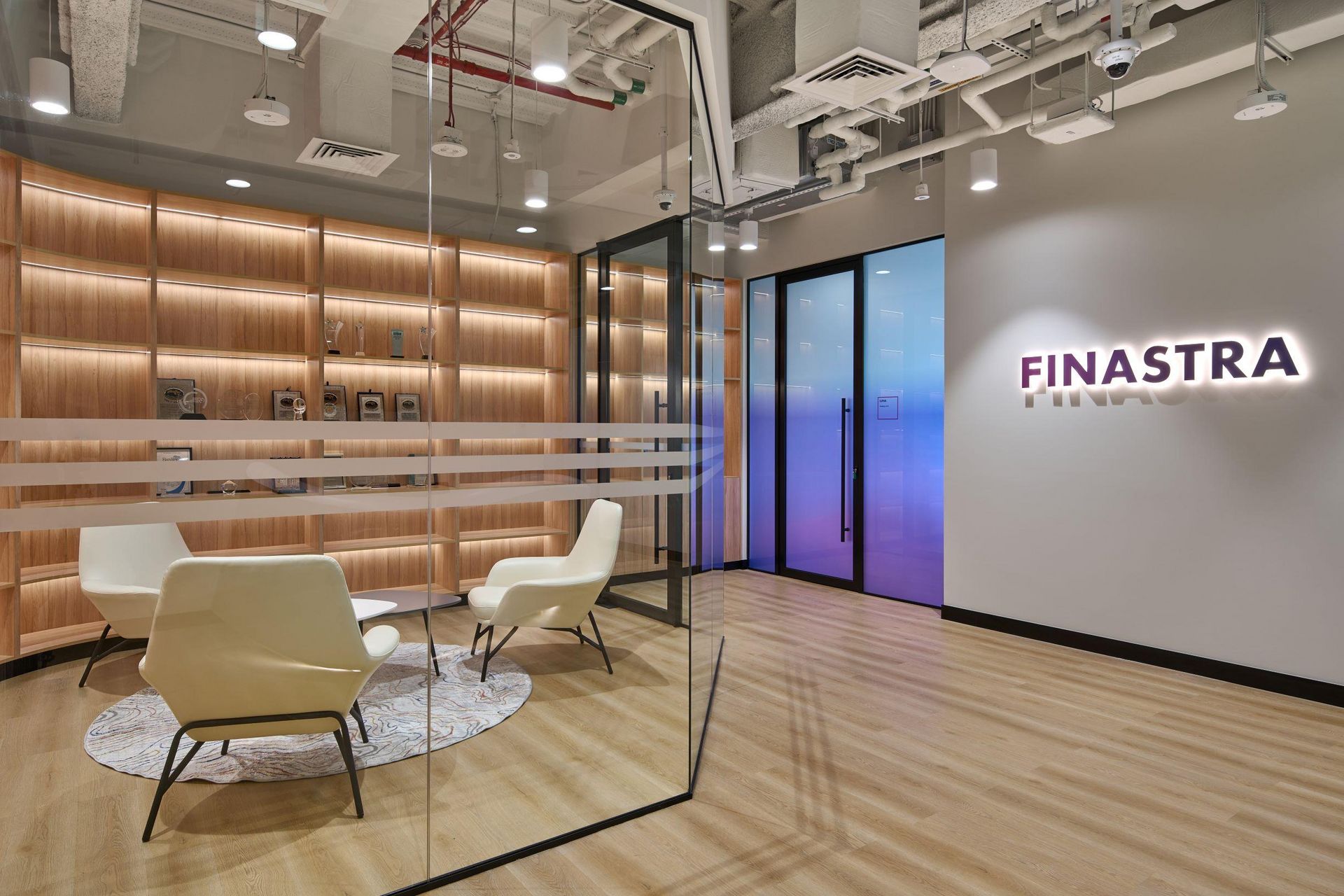
For businesses that want the financial case formalised rather than anecdotal, LEED and WELL certification provide a structured, third-party verified route. Certification does not just validate a design choice internally. It gives tenants, investors, and prospective employees an external, checkable signal that the business has actually delivered on its wellbeing commitments, rather than simply claiming to.
This matters increasingly for multinational tenants and businesses reporting against ESG frameworks, where a recognised certification carries more weight in due diligence than an internal sustainability statement.
Making the case internally
If you are trying to build the business case for wellness-focused design with your own leadership, the most persuasive argument is rarely the design itself. It is the cost of the alternative: Continued turnover, disengagement, and a workplace that quietly works against the outcomes the business is trying to achieve. Framed that way, wellness-focused design stops looking like an added expense and starts looking like risk mitigation with a measurable upside.
Where to start
The businesses that get the best return from wellness-focused design are the ones that build it into the brief from day one, rather than trying to add it once a standard fit-out is already underway. That is where the real financial case gets made, in the planning stage, not after the fact.
At Summertown, we help clients across the UAE weigh up exactly this decision, what wellness-focused design actually costs, what it returns, and how to build the case internally. If you are planning a fit-out and want to understand the numbers for your own space, take a look at some of our recent projects or get in touch and we can talk it through.
Nicola Trivett
General Manager & Sustainability Leader