




Nicola Trivett
General Manager & Sustainability Leader
Over the years, I have watched office design conversations shift. The question used to be simple: “How do we hit our LEED targets?” Today, organisations ask something broader. They want to know how their office affects the people inside it. That is exactly why WELL certification has become one of the most important conversations I have with clients right now.
At Summertown Interiors, we have delivered over 31 LEED-certified projects. Our credentials in green building are central to who we are. But LEED primarily measures the performance of a building. WELL measures something different. It measures how a building performs for the people living and working inside it.
This guide covers everything you need to know. We will look at what WELL certification involves, how it works, which programme suits your project, and why it matters for any organisation serious about sustainable workplaces.
I will also share how we have applied these standards in our own projects, because the best way to understand WELL is to see it in practice.
What Is WELL Certification UAE?
WELL Building Standard certification was developed by the International WELL Building Institute (IWBI). It is a performance-based framework. Specifically, it assesses how a building’s design, construction, operations, and policies support human health and wellbeing.
Most green building frameworks ask: “How efficiently does this building perform?”
WELL asks a different question: “How well does this building support the people inside it?” The two questions are connected, but they are not the same.
WELL v2 is the current version of the standard. It organises requirements across ten distinct concepts. Each concept contains preconditions, which are mandatory requirements, and optimisations, which earn points toward higher certification levels. The result is a rigorous, evidence-based system. It draws on decades of research in medical science, public health, and building science.
Certification is awarded through third-party verification by the Green Business Certification Inc. (GBCI). This is the same body that administers LEED. That independent oversight is what gives WELL its credibility. It is not a self-assessment. It is a verified, measurable commitment.
How Does WELL Compare to LEED Certification in Dubai?
One of the questions I hear most often is: “We already have LEED. Do we need WELL too?”
It is a fair question. LEED Certification Dubai focuses on the environmental performance of a building. It covers energy use, water efficiency, material selection, and construction processes. It is an environmental standard, and an excellent one. Our article on why sustainable workplace design matters for UAE businesses explores that business case in detail.
WELL, by contrast, is a human health standard. It looks at the air people breathe, the light reaching their desks, the water they drink, and the acoustic environment they work in. It also examines how actively the design supports physical and mental health.
The two frameworks are designed to work together. In fact, many progressive organisations are pursuing both simultaneously. The most sustainable workplace is one that is good for the planet and good for the people inside it.
You can read more about this link in our article on the ROI of wellbeing in UAE offices
The 10 WELL Concepts Explained
WELL v2 is built around ten concepts. Together, they define what a genuinely healthy indoor environment looks like. Here is what each one covers.
- Air: This concept addresses indoor air quality. It covers airborne pollutants, ventilation rates, and VOC (volatile organic compound) emissions from materials. Air quality affects cognitive function and concentration far more than most people realise. It is one of the most immediately impactful concepts.
- Water: The Water concept covers the quality and accessibility of drinking water on site. It includes filtration standards, testing protocols, and design features that encourage regular hydration.
- Nourishment: This concept looks at how an office supports healthy eating. It covers nutritional labelling, the availability of fresh food, and the physical design of kitchen and dining areas.
- Light: Lighting is one of WELL’s most technically detailed concepts. It covers natural daylight access and artificial lighting design. The focus is on supporting circadian rhythms. When people receive the right light at the right times, they sleep better, feel more alert, and enjoy better overall health.
- Movement: This concept encourages design that promotes physical activity throughout the day. Staircase design, ergonomic workstations, and sit-stand desks all contribute to this goal.
- Thermal Comfort: This concept addresses comfortable temperatures for occupants. It includes individual control options and the management of humidity, airflow, and radiant temperature.
- Sound: Acoustic comfort is consistently underestimated in office design. The Sound concept sets performance thresholds for background noise, echo, and sound privacy. Poor acoustic environments directly impact focus and stress levels.
- Materials: This concept examines the chemical composition of building materials, finishes, and furnishings. It sets limits on hazardous substances and encourages safer alternatives. It connects closely with responsible procurement and sustainable purchasing practices.
- Mind: The Mind concept is the most holistic of the ten. It covers mental health policies, access to nature, workplace culture, and design features that support stress management.
- Community: The final concept addresses inclusion, accessibility, and social connection. It examines how design and organisational policy foster equity and belonging across all occupants.
Ready to explore how these concepts could work in your office? View Our Sustainable Projects | Talk to Our Team
WELL Certification Levels: Which One Is Right for You?
WELL certification is awarded at four levels: Bronze, Silver, Gold, and Platinum. Each level reflects a progressively higher number of optimisation points beyond the mandatory preconditions.
Bronze is a solid entry point. It demonstrates that a project has met all preconditions and a meaningful threshold of optimisations. Silver and Gold represent increasing ambition across the ten concepts. Platinum reflects exceptional rigour across all areas.
For organisations starting out with WELL, Silver or Gold is a realistic and impactful goal. Platinum tends to suit organisations that have already embedded WELL thinking deeply into their culture. The right target depends on your project’s scope, your priorities, and how WELL fits alongside other goals such as LEED Certification.
Understanding the Three WELL Programmes
It is important to understand that WELL is not a single programme. The IWBI has developed several distinct frameworks, each serving a different purpose.
The WELL Building Standard is the core framework. It covers the full ten concepts and applies to new construction, interior fit-out projects, and existing buildings.
The WELL Health-Safety Rating was introduced in 2020. It helps organisations demonstrate that they maintain healthy, safe environments for occupants. It focuses on operational policies, maintenance protocols, air and water quality management, and emergency preparedness. This rating is renewed annually.
The WELL Equity Rating focuses on advancing equity, inclusion, and access within built environments. It recognises that health outcomes are shaped by social determinants. Buildings have a genuine role to play in creating environments where all occupants feel included and valued. This programme suits multinational organisations with diverse workforces and businesses that take their ESG reporting seriously.
The WELL Certification Journey: Step by Step
One of the most practical questions I hear is: “What does the WELL certification process actually involve?” Here is a clear overview.
- Step 1: Registration. The process begins on the IWBI’s WELL Online platform. At this stage, you select your programme, define your project boundaries, and establish the scope of work.
- Step 2: Strategy and design integration. The most effective WELL projects embed the standard’s requirements from the earliest stages of design. This is where the choice of interior fit-out company in Dubai matters most. An experienced partner with WELL Accredited Professionals ensures every design decision supports WELL performance. Attempting to retrofit compliance late in a project is costly and limiting.
- Step 3: Documentation review. Once the fit-out is complete, a comprehensive documentation package goes to GBCI for review. This includes design drawings, material data sheets, policy documents, and evidence for each applicable feature.
- Step 4: Performance verification. WELL is a performance-based standard. Documentation alone is not sufficient. A WELL Performance Testing Agent carries out an on-site assessment. They verify air quality, water quality, light levels, and acoustic performance directly.
- Step 5: Certification. Once documentation review and performance verification are complete, GBCI awards certification at the appropriate level.
The timeline from registration to certification typically spans 12 to 18 months. Larger or more complex projects may take longer.
Why WELL Certification in UAE Matters in 2026
The UAE context makes WELL certification especially compelling right now. The country’s wellness economy reached $40.8 billion according to the Global Wellness Institute. That figure reflects more than a consumer trend. It reflects a fundamental shift in how people across the region think about health and their working environment.
The national agenda reinforces this. The UAE Net Zero 2050 Strategy and the Dubai 2040 Urban Master Plan both favour buildings that prioritise occupant health and environmental performance. Our Journey 2030 sustainability roadmap is built around these same national priorities.
Talent is also driving the shift. Organisations across the UAE are finding that the quality of the working environment is a genuine differentiator. Employees no longer assess workplaces on salary alone. The physical environment communicates an employer’s values. A WELL-certified office sends a clear and credible signal to both existing staff and prospective hires.
Additionally, for organisations with formal ESG reporting obligations, WELL offers an internationally recognised, third-party verified credential. It contributes directly to the social component of any ESG framework. For multinationals operating in the UAE, this is increasingly valuable as investors and stakeholders scrutinise workplace standards more closely.
Summertown’s Experience with WELL
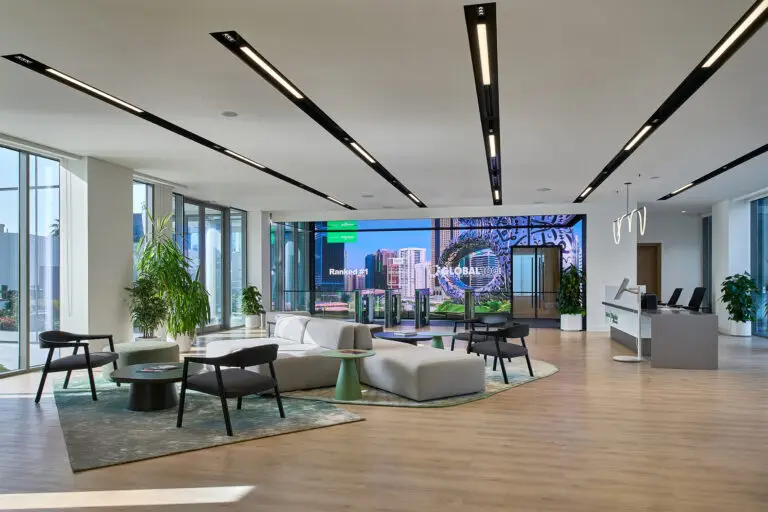
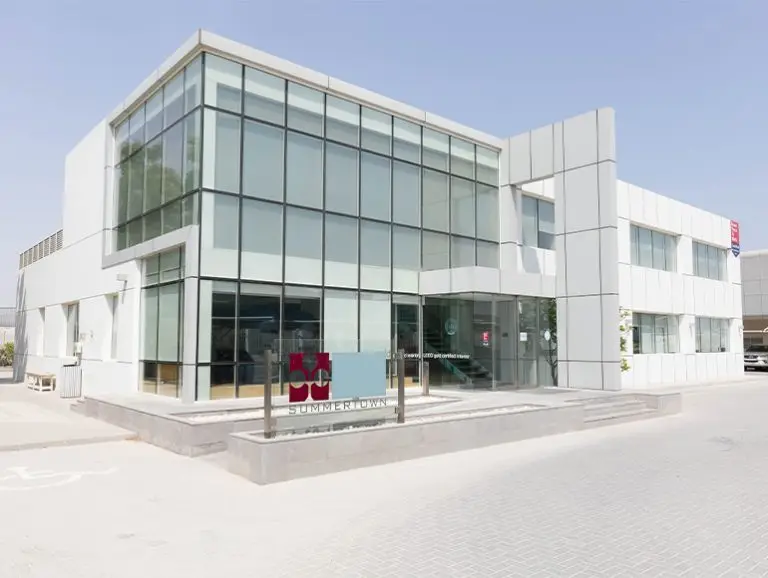
We would not advocate for WELL certification if we had not lived it ourselves. Our Dubai headquarters holds the WELL Health-Safety Rating. Everyone working at Summertown operates in an environment independently assessed and verified to meet rigorous standards. That experience directly informs how we design for our clients. We don’t design and build our projects based on trends. We deliver them for people. At Summertown, every space starts with listening and becomes an environment that supports wellbeing, sustainability, and how teams work every day.
Meet the team who make it happen.
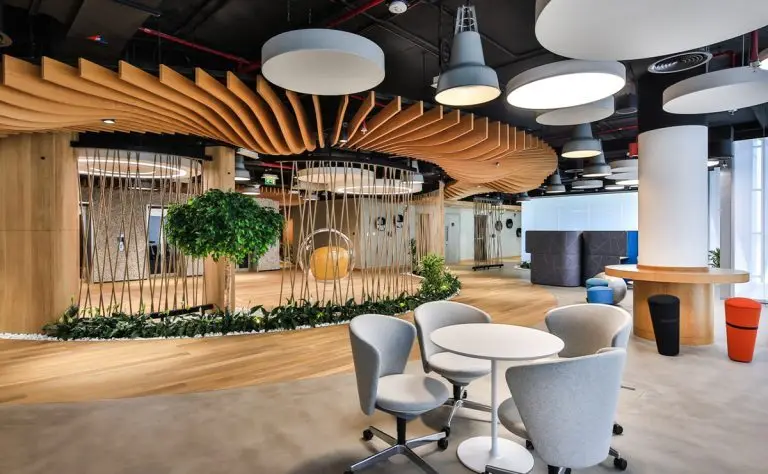
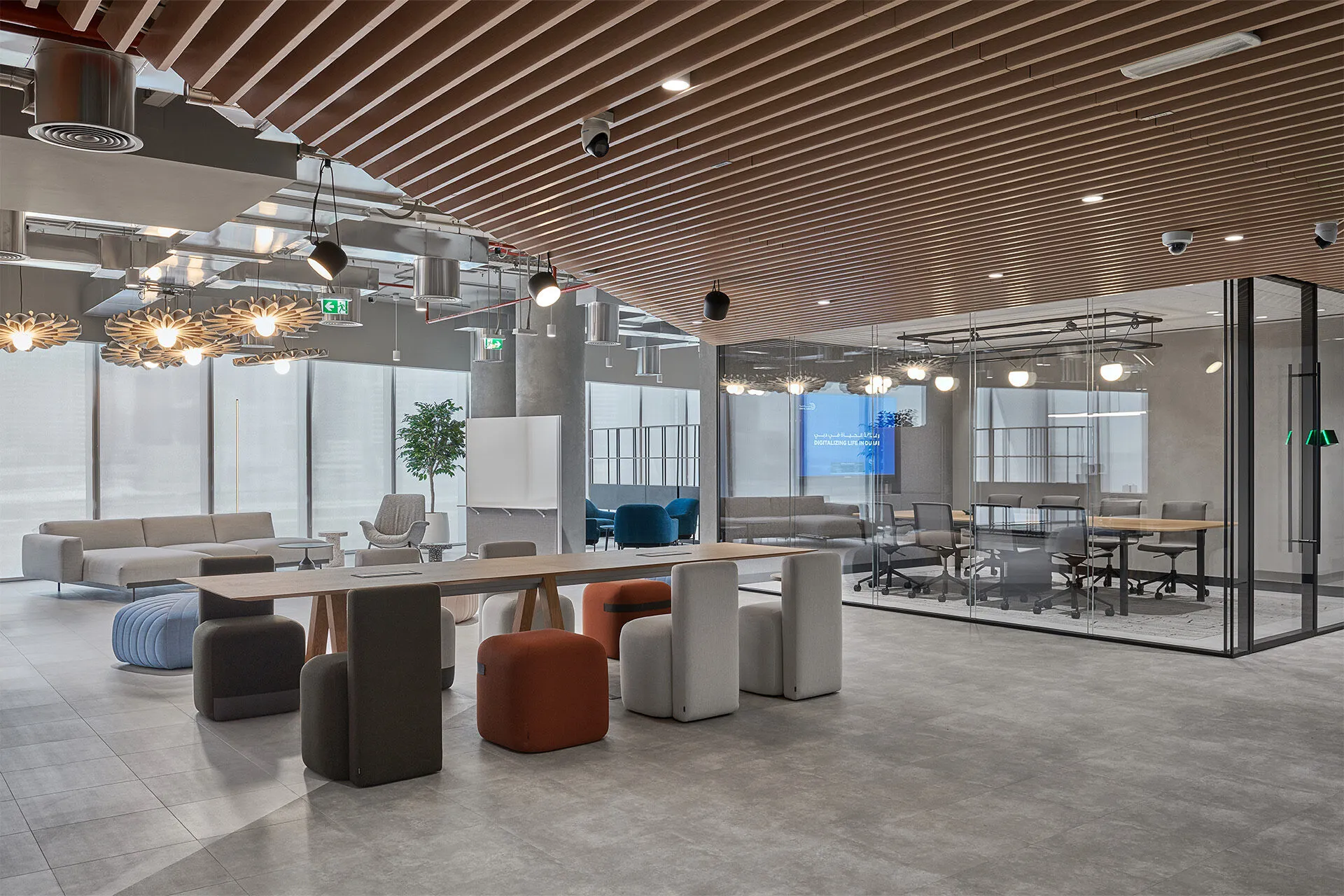
Our most recent WELL Equity project was The Nest for Schneider Electric in Dubai Silicon Oasis. It illustrates what is possible when WELL principles meet genuine design ambition. The project achieved 93% waste diversion, keeping 10,049 kg of materials out of landfill. [3] The space incorporates biophilic design, circadian lighting, acoustic zoning, and materials selected for both human health and environmental impact.
It is one of the most comprehensive sustainable office fit-outs we have delivered.
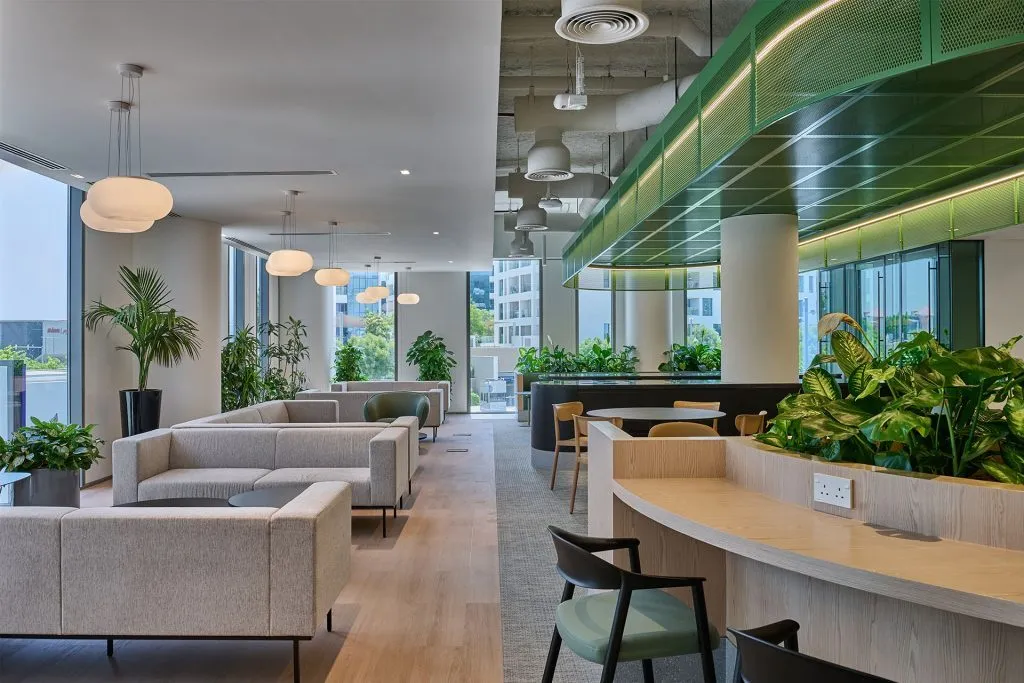
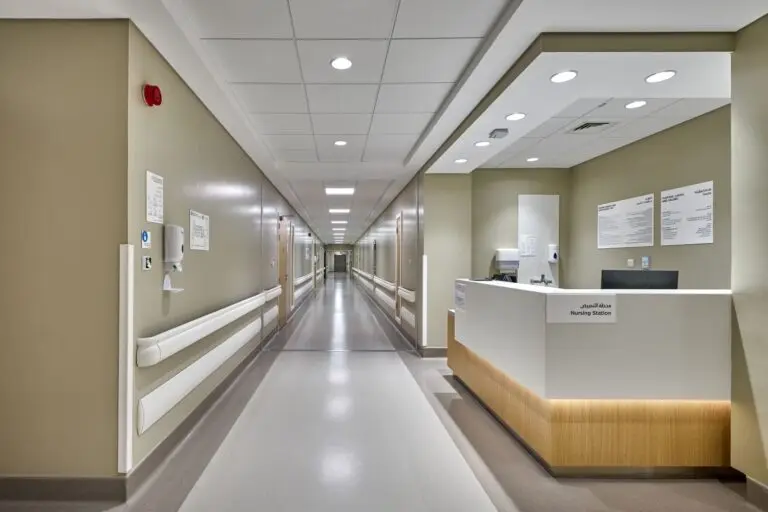
Our project for MSD, which also holds WELL Equity certification, shows that human-centred design is not reserved for technology companies or luxury budgets. Healthcare-adjacent organisations benefit greatly from WELL’s rigour. The connection between physical environment and occupant health is especially direct in those settings.
We are one of the only interior fit-out companies in Dubai with both LEED and WELL Accredited Professionals across our project teams. As a result, every decision on a project draws on a deep understanding of both environmental and human health standards.
Choosing the Right Partner for WELL Certification UAE
WELL is not a checklist. It is a commitment. It requires a partner who understands both the technical requirements and the human intent behind each concept.
When evaluating office fit-out companies in Dubai for a WELL project, ask these questions.
- Does the company have WELL Accredited Professionals on staff?
- Have they delivered WELL-certified or WELL-registered projects before?
- Can they demonstrate experience working with GBCI?
- And critically, does their own workplace reflect the values they are proposing for yours?
At Summertown, we start with the people. We ask who will use the space, what they need from it, and how design can support their health and focus. That thinking drives every material choice, every lighting decision, and every acoustic consideration.
Our Journey 2030 strategy commits us to 100% green-certified projects by 2030. WELL is central to that roadmap, alongside our expertise in LEED Certification Dubai and our Summertown Sustainability Standard. We also offer complimentary LEED Certified-level certification for projects over 2,000 sqm. For clients combining LEED and WELL, this reduces the financial barrier to achieving both internationally recognised credentials. Learn more on our LEED page.
Frequently Asked Questions
- How long does WELL certification UAE take? The timeline depends on project scale and complexity. For a fit-out project, the journey from registration to certified status typically takes between 12 and 24 months. Experienced partners help projects move through this process efficiently.
- Is WELL suitable for fit-out projects, not just new builds? Yes. WELL v2 is explicitly designed for interior fit-out projects. A significant proportion of WELL-registered projects globally are fit-outs, not ground-up constructions. This makes it highly relevant for office refurbishments and new-office fit-outs within existing buildings.
- Can we pursue WELL and LEED on the same project? Yes, and many UAE organisations are doing exactly that. LEED and WELL share common ground in air quality, material specifications, and water quality. Pursuing both simultaneously creates efficiencies rather than doubling the workload.
- What is the difference between WELL and WELL Equity? The WELL Building Standard covers the full ten-concept framework for individual and community health. The WELL Equity Rating focuses specifically on equity, inclusion, and access within built environments. The right choice depends on your organisation’s goals.
Conclusion
WELL certification represents a genuine shift in how we think about sustainable workplaces. It is not enough for a building to be energy-efficient if the people inside are fatigued, stressed, or unsupported. The most effective offices in 2026 perform well on both measures: for the planet and for people.
The UAE’s sustainability agenda, its growing wellness economy, and the competitive talent market all point in the same direction. Organisations investing in WELL-certified spaces invest in their people, their ESG credentials, and their long-term performance.
With 28 years of experience delivering sustainable interior fit-outs across the UAE, we bring the credentials, the lived experience, and the team to make WELL work for you.
Ready to take the next step? Let us talk about your workplace.
Sources
- International WELL Building Institute (IWBI). WELL v2 Standard: Certification Overview. iwbi.com. Available at: https://www.wellcertified.com
- Global Wellness Institute (November 2025). New Global Wellness Institute Report Shows UAE Wellness Economy Now Worth $40.8 Billion. Available at: https://globalwellnessinstitute.org/press-room/press-releases/new-global-wellness-institute-report-shows-uae-wellness-economy-now-worth-40-8-billion/
- Summertown Interiors (2025). Schneider Electric – The Nest Project: Sustainability Performance Data. summertown.ae. Available at: https://www.summertown.ae/projects/schneider-electric-sustainable-fit-out-dubai/
- Summertown Interiors (2025). Sustainability Report 2024–2025. summertown.ae. Available at: https://www.summertown.ae/sustainability-hub/
Nicola Trivett
General Manager & Sustainability Leader