




Nicola Trivett
General Manager & Sustainability Leader
If you’re planning a sustainable office fit-out in Dubai, you’ve probably heard both acronyms thrown around interchangeably.
They’re not the same thing, and choosing between LEED certification and WELL certification, or deciding whether you need both, 3depends entirely on what you’re trying to achieve.
After guiding more than 31 projects through LEED certification across the UAE, I get asked this question almost every month.
So let’s break it down properly.
LEED vs WELL certification: What really sets them apart
The simplest way to think about it is this: LEED certification focuses on how responsibly a building performs, while WELL certification focuses on how well it supports the people inside it.
LEED looks outward at a building’s environmental impact. WELL looks inward at the health, wellbeing and comfort of its occupants.
The confusion comes from the fact that both use similar terminology, points systems and certification levels, making it easy to assume they measure the same things. They don’t. Understanding the difference from the outset helps you choose the right certification and avoid unnecessary costs later on.
What LEED certification measures in a Dubai office fit-out
LEED stands for Leadership in Energy and Environmental Design. Developed by the U.S. Green Building Council (USGBC), it is the world’s most widely recognised green building certification system, with more than 200,000 certified projects globally.
LEED assesses a building’s environmental performance across key areas such as energy efficiency, water conservation, sustainable materials, waste management and indoor environmental quality. Projects earn points in each category, which determine their certification level: Certified, Silver, Gold or Platinum.
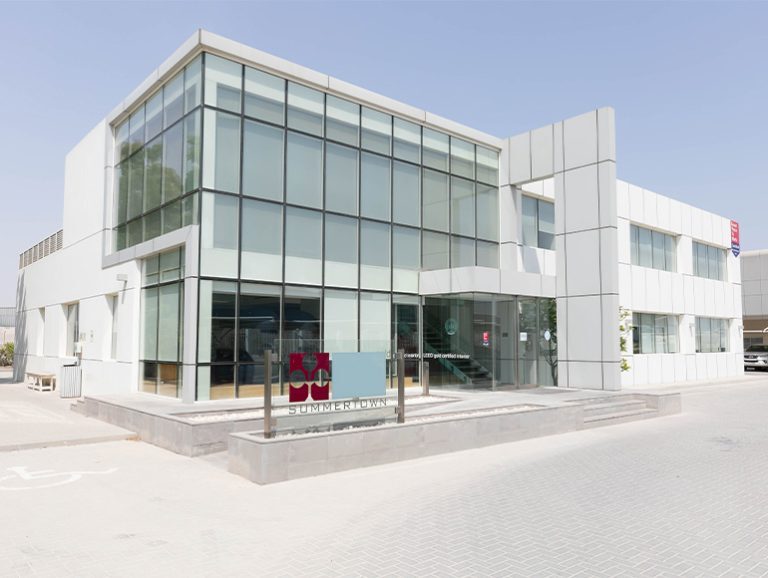
At Summertown, we’re proud that our Jebel Ali headquarters was the first fit-out contractor office in the UAE to achieve LEED Gold certification. We’ve continued to maintain this standard through our ongoing operations and maintenance practices.
What WELL certification measures for occupant health
WELL takes a different approach. Launched by the International WELL Building Institute (IWBI) in 2014, the WELL Building Standard measures how a building supports the health and wellbeing of the people who use it. It assesses ten key concepts, including air, water, light, movement, thermal comfort and mental wellbeing.
Unlike LEED, which focuses on environmental performance, WELL is built specifically around human health.
Another key difference lies in how each certification is assessed. LEED is largely based on documentation that demonstrates a building meets its sustainability requirements. WELL goes a step further by requiring onsite performance testing. Accredited assessors measure factors such as air quality, water quality, lighting and acoustics before certification is awarded.
This more rigorous approach means a WELL certification reflects a building’s actual, measured performance rather than its design intent alone.
Read our complete guide to WELL certification for UAE office fit-outs.
LEED or WELL: Which certification fits your Dubai business
For most commercial fit-outs in the UAE, LEED is the natural starting point. It’s globally recognised. It’s what investors and tenants in this region typically look for. And it directly supports Dubai’s Net Zero 2050 ambitions. LEED also tends to be the certification that shows up in property valuations and rental negotiations. Certified buildings in Dubai often command stronger rental yields than uncertified comparables.
WELL becomes the right conversation when the priority shifts from environmental credentials to employee wellbeing. Say you’re relocating a team into a new headquarters and retention is genuinely on the line. In that case, WELL speaks directly to daily experience. Its focus on air quality, natural light and acoustic comfort shapes how people actually feel in a space, not just how the building performs on paper. Research comparing WELL-certified and non-certified buildings backs this up. It found notably fewer complaints related to Sick Building Syndrome in WELL spaces, along with higher reported satisfaction with the working environment (air-qualitee.com).
So how do you actually decide? Ask who you’re building for. Investors, landlords or regulators? LEED carries more weight. Your own workforce, especially if you’re competing hard for talent? WELL usually matters more, even when a LEED-certified base build is already in place.
Can you achieve both LEED and WELL certification?
Yes, and increasingly, businesses do. The US Green Building Council and the International WELL Building Institute now offer a streamlined crosswalk between the two systems (gbdmagazine.com). It exists for exactly this reason, to cut down on duplicated effort for projects pursuing both. In practice, this means documentation and strategies built for one standard often carry over to support the other, particularly around indoor air quality and materials selection.
That said, we don’t recommend dual certification for every client. It adds cost and complexity. For a smaller office fit-out, that extra investment isn’t always proportionate to the benefit. Larger headquarters projects are a different story. Here, pursuing both together can be the strongest signal available in the Dubai market. It tells tenants, investors and employees the same thing: That the building performs responsibly, and that the people inside it were designed for, not treated as an afterthought.
Real-world example: LEED Gold in action at Al Bahr Tower, Abu Dhabi
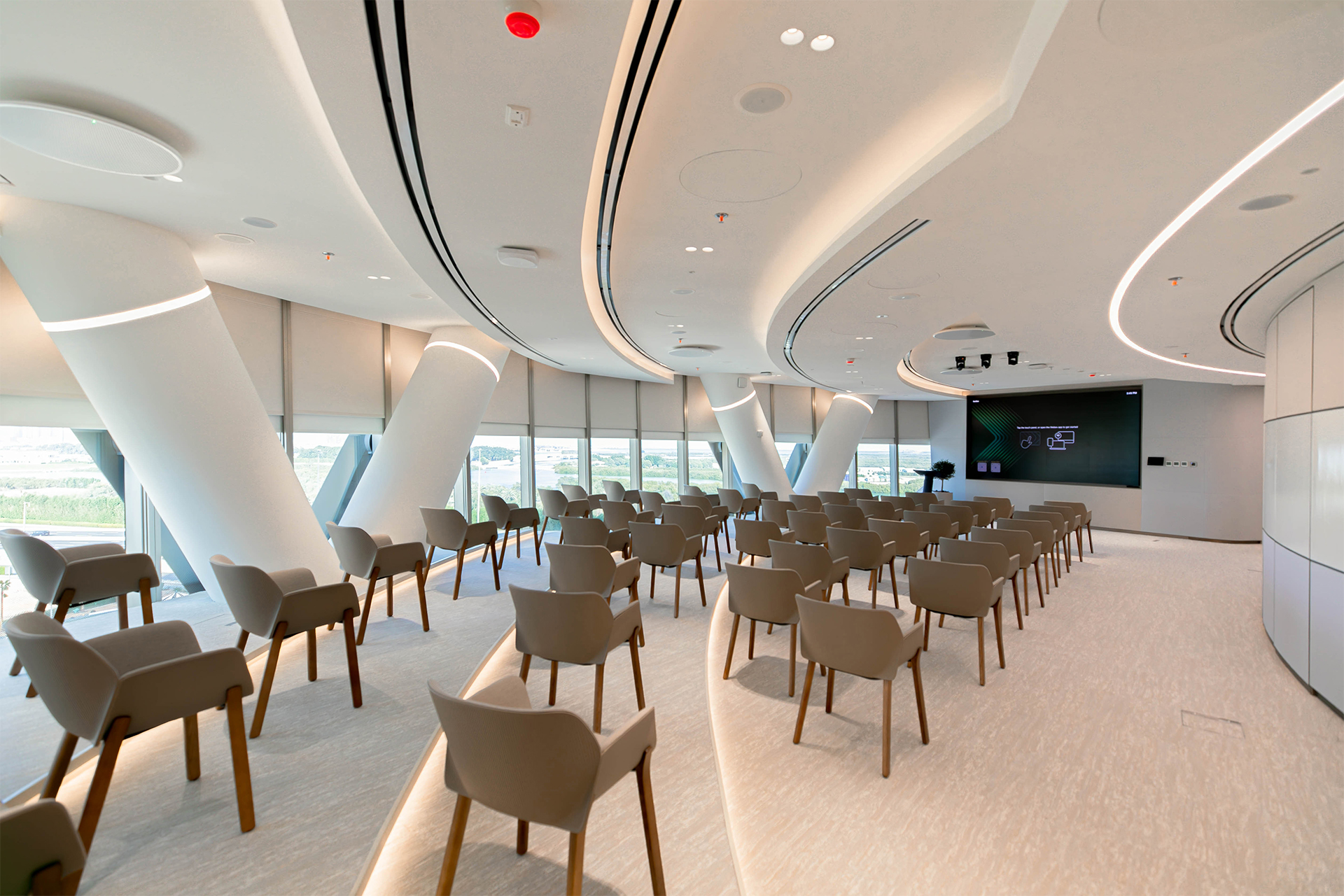
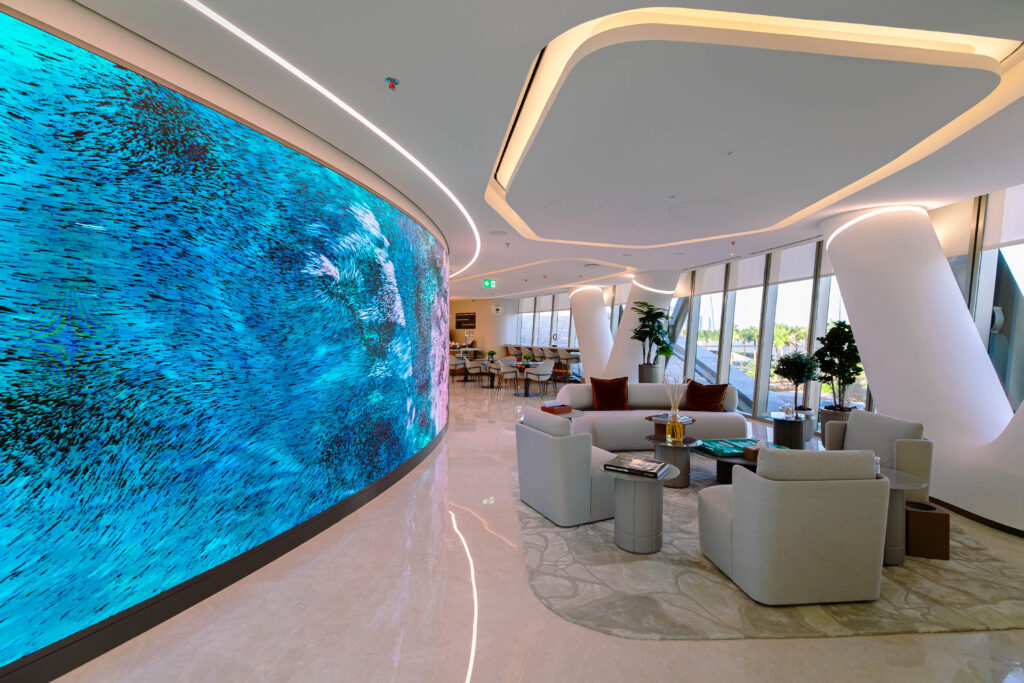
We’re currently applying LEED principles to one of our most ambitious projects to date: A 2,748 square metre, five-floor transformation for the Abu Dhabi Investment Council at Al Bahr Tower, targeting LEED Gold certification. The brief called for an environment that reflects executive presence while supporting collaboration and occupant wellbeing, delivered alongside Munazuri Design Studio as lead design consultants and PMK Consultant managing project and cost oversight.
Every floor is being built with environmental responsibility at its core, from material selection through to the mezzanine fitness centre and integrated building systems. It’s a good example of how LEED thinking shapes a project long before certification is ever submitted for review. You can read the full project story on our Al Bahr Tower case study.
Practical advice before you start your certification journey
A few things I’d tell any business starting this process today.
Decide your certification goal before design begins, not after. Retrofitting LEED or WELL requirements into a finished design almost always costs more than building them in from day one.
Get your documentation habits in order early too. LEED rewards teams that track energy, water and material data as they go, rather than reconstructing it at the end.
If WELL is on the table, budget time for performance testing. Certification depends on onsite verification, not paperwork alone, so your timeline needs to account for scheduling those tests, not just finishing construction. And talk to your fit-out partner about the 2,000 square metre threshold.
At Summertown, we offer complimentary LEED certification for qualifying projects over that size, one of the biggest cost barriers removed. You can explore more through our Sustainability Hub.
Planning a commercial office fit-out specifically?
Run the numbers before you commit to a certification level.
Our free LEED ROI Calculator estimates the potential energy savings, payback period and long-term value based on your project size, so you can build the business case on real figures rather than guesswork. It’s built for commercial office projects. For healthcare, hospitality or education fit-outs, speak to our team directly instead, since the calculator won’t give an accurate picture there.
LEED ROI Calculator
Project Information
Contact Us
Getting the decision right from the start
Neither standard is objectively better. LEED and WELL simply answer different questions. The right choice for your business comes down to what you’re being asked to deliver, whether that’s a stronger ESG position, a healthier workplace, or both.
Weighing up LEED, WELL, or a combination of the two for an upcoming Dubai office fit-out? We’re happy to talk it through, project and budget both included. Get in touch and we’ll help you map out the right path.

Nicola Trivett
General Manager & Sustainability Leader