

Updated August 2026: This article has been updated to include Episode 4 of the Sustainabites series, covering designing for longevity in sustainable fit-out.
Something has shifted in the conversations I have been having with clients over the past few years. The interest goes deeper. People no longer ask whether sustainability matters in a fit-out project. They now ask how to actually make it happen: What materials to choose, where the carbon sits, and how to make responsible decisions without compromising on design or budget.
That shift is real, and it is accelerating. The UAE has committed to Net Zero by 2050. Dubai’s Zero Waste by 2030 target is already shaping how commercial spaces are designed and specified today. As a result, businesses across the region face genuine pressure to align their operations, and their physical spaces, with these commitments. The demand for credible, practical guidance has never been higher.
The challenge is that most of that knowledge still sits inside technical documents, industry reports, and project teams. It rarely reaches the people who need it most: The clients, designers, and business owners making decisions every day.
That is what Sustainabites is here to change.
A New Kind of Sustainable Fit-Out Content
Sustainabites is our new short video series, created to bring important ideas in sustainable fit-out and interior design to a wider audience. Each episode focuses on one subject and explores it clearly, honestly, and without unnecessary complexity. The format is intentional. We wanted to create something genuinely useful, because good sustainability content should respect people’s time and meet them where they are. Three episodes are live now, and each one covers a topic we hear about constantly on our projects.
Episode 1: Embodied Carbon and Why Early Decisions Matter Most
Our first episode tackles embodied carbon. It is a subject that comes up in almost every sustainability conversation we have, yet the industry still widely misunderstands it. Embodied carbon covers the greenhouse gas emissions that building materials and construction processes generate across a project’s full lifecycle. According to the World Green Building Council, it accounts for around 11% of global energy-related CO2 emissions. (Source: World Green Building Council, “Bringing Embodied Carbon Upfront,” 2019.)
What makes this particularly relevant to fit-out is timing. The choices that most influence a project’s carbon footprint happen at the design stage, often before anyone has ordered a single material. By the time work begins on site, teams have already fixed many of those decisions. Because of this, Episode 1 focuses on why acting early is not just good practice. It is where the real difference is made.
If embodied carbon is a topic you want to explore further, our LEED certification guidance explains how early material decisions feed directly into green building certification.
Episode 2: Sustainable Design in F&B Spaces
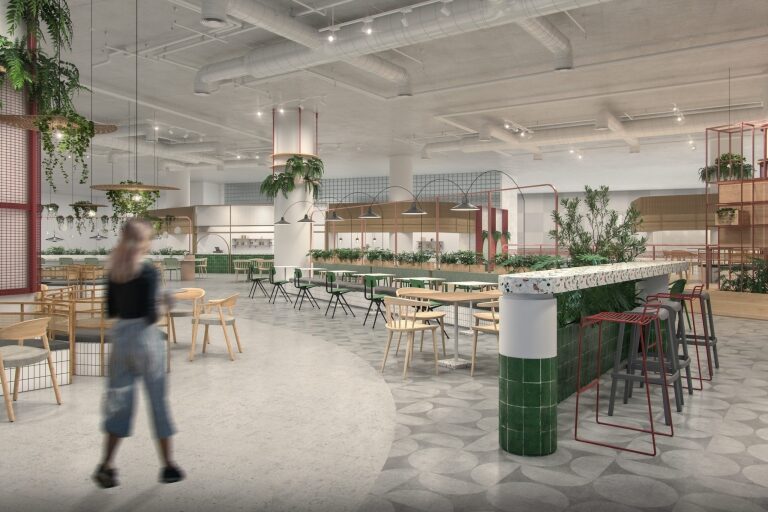
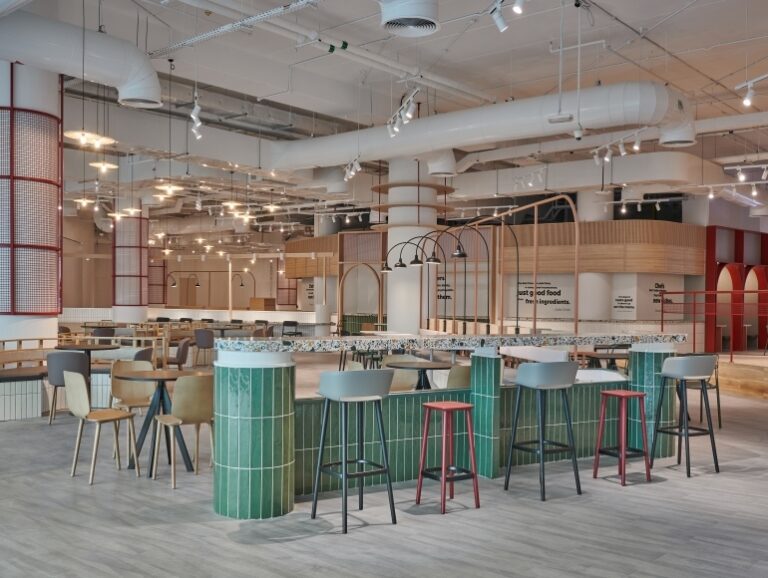
This episode 2 moves into the food and beverage sector. Although this area sometimes receives less attention in sustainability discussions, design decisions here carry real environmental and operational weight.
Restaurants and cafés face specific challenges. High energy consumption, significant water use, and considerable waste are all part of the business. However, thoughtful design can actively address all three. Smart layouts improve energy flow. Efficient lighting systems cut consumption without affecting atmosphere. Healthier materials improve indoor air quality for both guests and staff. Water-saving fixtures deliver measurable savings over time. These are not abstract ideas. They are choices we make on F&B projects regularly, and they deliver results.
The UAE wastes an estimated 3.27 million tonnes of food each year, at a cost of approximately $3.5 billion to the economy. (Source: UAE Ministry of Climate Change and Environment.) Because of this, how a space is designed has a direct bearing on how efficiently it runs and how much waste it generates at source. Episode 2 brings this to life in a practical, accessible way.
You can explore how we approach sustainable hospitality fit-out in the UAE through some of the projects we have delivered for F&B clients across the region.
Episode 3: Sustainable Materials That Lead With Design
The third episode challenges a perception we still encounter surprisingly often: The idea that sustainable materials require a compromise on aesthetics or quality.
That is simply not the case. Recycled glass, PET acoustic panels from post-consumer waste, reclaimed stone, FSC-certified timber, bamboo, cork. We specify all of these regularly on projects across the UAE. They perform beautifully, tell a story, and carry a significantly lower environmental footprint than conventional alternatives. Furthermore, we prioritise local sourcing wherever possible, both to reduce transport emissions and to support the UAE supply chain. Every supplier goes through a structured assessment, and all framework contracts include responsible sourcing clauses. (Source: Summertown Interiors Responsible Business Report.)
Great design and responsible material choices work together, not against each other.
Episode 4: Designing for Longevity
Great design should not just look good on the day a space opens. It should continue to perform for years, and in many cases decades, to come. That is the idea behind Episode 4 of Sustainabites, and it is one of the most important conversations we have with clients at the start of any new project.
Designing for longevity means creating spaces that are durable, adaptable, and built to evolve alongside the businesses that use them. Businesses grow. Teams change. Ways of working shift. A space that cannot keep up with those changes will need replacing far sooner than one that was planned with flexibility in mind. That is not just a sustainability issue. It is a commercial one too.
When a space lasts longer, it generates less waste. It consumes fewer resources over its lifetime. And it delivers significantly greater value to the people and organisations it serves. Fewer renovations mean less material waste, lower costs, and a smaller overall footprint across the lifecycle of a project. Because the spaces that last the longest are, ultimately, the ones that tread the lightest.
All four episodes are available now across our LinkedIn, Instagram, and Vimeo channels. We will continue adding new episodes, covering more of the topics that matter most to our clients and to the industry.
If you would like to explore any of the themes we cover in the series, our Sustainability Hub offers resources, insights, and guidance for businesses navigating sustainable fit-out in the UAE.